The Saritag mining area is located in a steep valley in western Tajikistan. Miners are working tirelessly to extract antimony ore from the crisscrossing tunnels beneath peaks 4,000 meters above sea level. This silvery-gray metal, once known as a cosmetic ingredient, has now become a key resource for strategic industries, used in the manufacture of solar panels and to reinforce the armor of military vehicles.
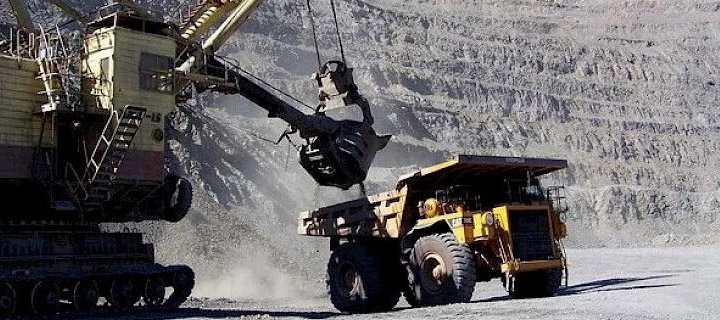
“Tajikistan has many antimony deposits,” said Zhumazoda, deputy director of Talko Gold, to AFP. The company supplies 10% of the world's antimony. According to the U.S. Geological Survey, Tajikistan's antimony production in 2023 was approximately 21,000 tons, accounting for a quarter of global production.
Antimony is just one of the abundant mineral resources in Central Asia. From the mountains of Kyrgyzstan to the deserts of Uzbekistan and Turkmenistan, the rich key mineral resources of Central Asian countries have attracted the attention of many countries around the world. Even U.S. President Trump stated at the “C5+1” meeting between the U.S. and the five Central Asian countries last November that Central Asia is an “extremely rich region.” Media outlets generally believe he was referring to the region's key mineral resources.
"Central Asian countries have joined the ranks of the world's top 20 strategic resource producers," wrote Akerromov, head of the Center for Progressive Reforms, a think tank in Uzbekistan, in an online article. He stated that Central Asia possesses some of the world's largest reserves of key minerals—manganese accounts for 38.6% of global reserves, chromium 30.1%, lead 20%, zinc 12.6%, titanium 8.7%, aluminum 5.8%, copper and cobalt 5.3% each, and molybdenum 5.2%.
According to US media reports, experts have stated that large quantities of rare earth elements have been discovered in various locations in Kazakhstan, Kyrgyzstan, and Uzbekistan. Zircon, apatite, xenotime, pyrochlore, and niobite are among the richest rare metals and minerals in Central Asia. In 2016, the U.S. Geological Survey listed 384 rare earth deposits in the region, including 160 in Kazakhstan, 87 in Uzbekistan, 75 in Kyrgyzstan, 60 in Tajikistan, and two in Turkmenistan.
Kazakhstan is a mining giant in Central Asia, possessing not only the world's largest chromium reserves (estimated at 230 million tons, compared to a global total of 570 million tons), but also being the world's second-largest chromium producer—a crucial mineral for wind power modules. Kazakhstan ranks fifth globally in zinc reserves and also has significant reserves of copper, cadmium, and bauxite. Furthermore, the country is a leading global supplier of uranium, producing approximately 40% of the world's uranium in 2023.
The Hill recently reported that Kazakh geologists announced the discovery of a rare earth metal deposit, estimated at over 20 million tons, located approximately 420 kilometers from the capital. If confirmed, this reserve will make Kazakhstan the third largest rare earth deposit in the world, after China and Brazil.
According to a report by the Dutch think tank The Hague Institute, Uzbekistan is rapidly establishing itself as a regional mineral hub, with more than 30 mineral resources identified nationwide, including copper, molybdenum, selenium, lithium, and cadmium. The country is the world's fifth-largest supplier of uranium and ranks 11th globally in proven copper reserves. An article published on the website of the Center for Strategic and International Studies (CSIS) indicates that Uzbekistan announced new mineral discoveries in 2024, including tungsten, lithium, and germanium, as well as 14 deposits containing rare earth elements.
Tajikistan ranks among the top 20 globally in zinc reserves and possesses substantial aluminum, silver, copper, and lead deposits. Oil and gas remain the dominant industries in Turkmenistan's economy, but the country also holds a significant position in Central Asia's key mineral landscape. According to SFA (Oxford), a global critical minerals consultancy, Turkmenistan possesses substantial reserves of sulfur, bromine, and iodine, minerals widely used in chemical manufacturing, pharmaceuticals, and components for clean energy technologies. Kyrgyzstan is also gaining recognition for its lithium and antimony reserves, crucial for batteries and electronic devices. Significant titanium deposits have also been discovered in the country's Kyzylkol deposit.
Development Obstacles: Electricity, Geological Exploration, and Processing Capacity
“Mining remains a crucial pillar industry for the two largest economies in Central Asia,” according to an article published on the CSIS website. This industry contributes approximately 17% to Kazakhstan’s GDP and about 8% to Uzbekistan’s. This reflects Central Asia’s deep-rooted mining tradition and existing mining conditions, which support mining expansion.
However, the development of key minerals in Central Asia also faces numerous challenges. Meirkhanov, a scholar who previously worked at the Belfer Center for Central Asia at Harvard Kennedy School, explains that outdated geological survey data and limited investment have prevented the development of a large amount of mineral resources. For example, much of Kazakhstan’s geological data was collected during the Soviet era, and the country’s exploration expenditure in 1990 alone was equivalent to its total expenditure between 2003 and 2023. The CSIS article states that only 40% and 6% of Uzbekistan and Tajikistan’s territories, respectively, have completed geological exploration.
According to The Diplomat, another structural obstacle to developing critical minerals in Central Asia is the lack of local processing capacity. Historically, Central Asian countries have exported raw ores. Processing, rather than extraction, remains a major challenge in the critical mineral supply chain. While Kazakhstan is capable of refining metals such as copper, zinc, and lead, the region lacks facilities to process minerals like lithium, uranium, nickel, and cobalt.
Umarov, a scholar at the Carnegie Endowment for International Peace's Russian-Eurasian Center, stated that Central Asia has long been engaged in the extraction and processing of oil and gas, particularly Kazakhstan, Turkmenistan, and Uzbekistan, which rely heavily on the export of these fossil fuels for a significant portion of their fiscal revenue. However, critical minerals are far more complex. "These resources sometimes require special methods of extraction, processing, and transportation," he noted, pointing out that the entire process from extraction to refining is technologically demanding and requires substantial capital investment.
"Electricity supply restrictions stemming from the legacy of the Soviet Union have severely hampered the exploitation and processing of mineral resources in Central Asia." According to an article published on the CSIS website, under the Soviet system, electricity production and distribution in each republic were centrally managed, with little consideration given to modern national borders and national energy needs. After independence, the five Central Asian republics have struggled to balance power generation, energy imports, and domestic demand. The mining industry demands enormous energy, but Central Asia still relies on aging power plants and outdated transmission lines, limiting its ability to expand mineral production. The region also suffers from high transmission and distribution losses, as well as frequent seasonal power outages.
Turkish Anadolu Agency and other media outlets have stated that Central Asia possesses enormous mineral resource potential, but developing these resources requires substantial investment, new technologies, and long-term commitments. By 2030, upgrading national and regional networks and integrating renewable energy to provide reliable electricity for the mining industry will require at least $20 billion in investment from Central Asia.
Reprinted from Global Times