Significant progress has been made in mining cooperation between Kazakhstan and Afghanistan. During the opening ceremony of the Kazakhstan Trade House in Kabul, Sharkia Zinc, a subsidiary of Kazakhstan's state-owned mining group, and Afghan German Bakhtar Company of Afghanistan officially signed a zinc ore supply contract, marking a substantial step forward in cooperation between the two countries in the mineral resources sector.
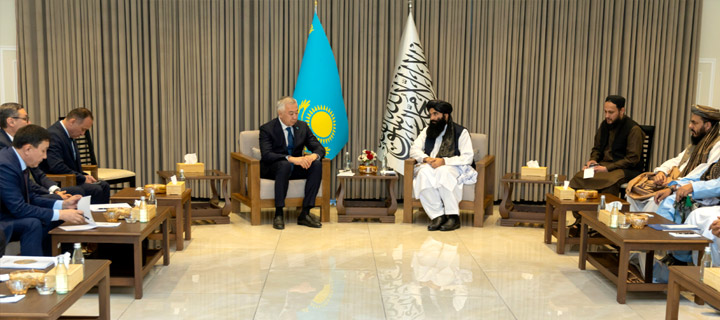
According to the agreement, Sharkia Zinc will purchase up to 30,000 tons of zinc ore annually from Afghanistan, with a total contract value of US$18.88 million. The ore will be transported to Kazakhstan under DAP (Delivered to Destination) terms, with Afghanistan bearing all costs and risks during transportation, while Kazakhstan will be responsible for import customs clearance and unloading.
In recent years, Afghanistan's abundant mineral resources have attracted increasing attention from neighboring countries and international mining companies. The Kazakh government believes that it already possesses mature polymetallic ore processing capabilities and can utilize existing beneficiation and smelting facilities to further process ore from Afghanistan, achieving complementary resource advantages.
In fact, the groundwork for cooperation between the two sides has already been laid. In the autumn of 2025, the Kazakhstan National Mining Company organized an expert team to conduct ore sampling at the Pami-Kakrak deposit in Bamiyan Province, Afghanistan. After the samples were sent to the Kazakhstan Zinc Industry Laboratory for testing, the results showed that the ore fully met the requirements of Kazakhstan's existing processing system, laying the technical foundation for subsequent commercial cooperation.
This import cooperation is also closely related to the raw material pressure faced by Kazakhstan's domestic zinc industry. Data shows that from January to May 2026, Kazakhstan's copper and zinc ore production decreased by 18.8% year-on-year, while unprocessed zinc production decreased by 12.9% year-on-year. Against the backdrop of tightening domestic resource supply, importing Afghan ore helps ensure the raw material supply for smelting enterprises and improves the stability of related industrial chains.
It is worth noting that Kazakh companies' interest in Afghan mineral resources is not limited to zinc ore. Eurasian Resources Group (ERG) has previously stated that it is studying the possibility of participating in the development of chromium mines in Afghanistan, and does not rule out cooperation through the establishment of joint ventures in the future.
As the connectivity between Central Asia and South Asia continues to advance, Afghanistan's abundant mineral resources are gradually being integrated into the regional industrial chain. For Kazakhstan, importing ore and exporting processing capacity will not only help enhance the competitiveness of its domestic metallurgical industry but also further consolidate its position as a mining and processing center in Central Asia. For Afghanistan, mining cooperation is expected to become an important breakthrough for attracting foreign investment and promoting economic recovery.
The signing of this zinc ore import contract indicates that mining cooperation between Kazakhstan and Afghanistan has moved from the resource assessment stage to the actual trade stage. Future cooperation between the two sides in multiple mineral sectors, including zinc, chromium, and copper, warrants continued attention.
Kazakhstan lacks not smelting capacity, but a stable source of ore; Afghanistan lacks not resources, but markets and processing capacity. This cooperation essentially represents the beginning of a regional division of labor: "Afghan resources + Kazakhstan's industrial system." For those interested in mining investment in Central Asia, this is a new trend worth monitoring in the long term.
Reprinted from Silk Road Mining Observation