Amidst accelerating global competition for mineral resources and energy transition, Kazakhstan has launched its largest geological exploration program in decades.
By improving exploration accuracy and coverage, the government aims to lay a solid foundation for medium- and long-term resource development and capital investment.
High-Resolution Exploration Underway
Following President Kassym-Jomart Tokayev's directive to expand the coverage of modern geological exploration, the Kazakh government has officially launched a new phase in its research on underground resources.
According to the plan, by 2025, 20 geological survey projects will have been launched, covering approximately 100,000 square kilometers, with geological mapping at a scale of 1:50,000. In the following three years, systematic surveys will be conducted annually on approximately 30,000 square kilometers of the most promising areas.
Compared to the 1:200,000 scale geological maps of the Soviet era, this new round of exploration represents a significant leap in accuracy and data density.
In terms of funding, the government plans to invest 240 billion tenge (approximately US$500 million) over the next three years for project implementation, seismic exploration in low-exploration sedimentary basins, and the construction of modern geological infrastructure.
This amount already exceeds the total investment of US$469 million in this field over the past 15 years.
Resource security and investment logic go hand in hand.
From an industry perspective, this investment is not merely a budget expansion, but also a move towards mainstream international exploration paradigms.
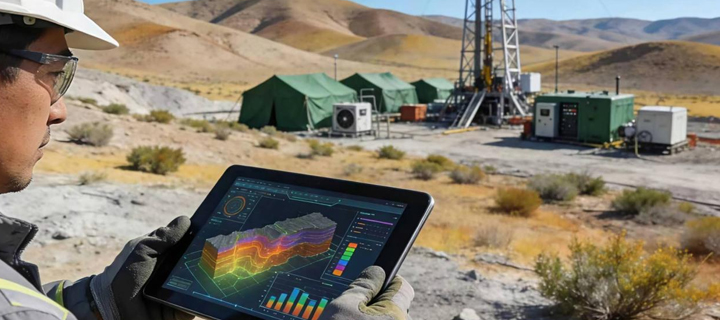
Project content covers remote sensing data analysis, airborne geophysical and geochemical research, and large-scale field operations, while simultaneously promoting the modernization of laboratory analytical capabilities and the digitization of geological data.
The government has explicitly benchmarked against the practices of the EU, Canada, Australia, and China to improve the accuracy of geological predictions and reduce exploration uncertainty.
Experts believe that systematic and detailed mapping will directly affect the risk pricing of early-stage projects, creating conditions for private capital entry.
Mineral and oil and gas development proceed in tandem.
In block selection, the relevant authorities prioritize resource depletion risk, the number of entities using underground resources, and the strategic value of mineral types.
Assessments indicate that multiple locations possess the potential to discover copper, gold, lead, zinc, rare earth elements, barite, and bauxite.
Regarding oil and gas, low-exploration areas such as the North Torgai Basin, the Shusarysu Basin, and the Syr Darya Basin have been identified as key areas for seismic exploration.
As Kazakhstan's rare earth resource potential gains international attention, this round of development is expected to reshape its resource landscape and enhance its strategic position in the global mineral supply chain.
Reprinted from KYPCNB